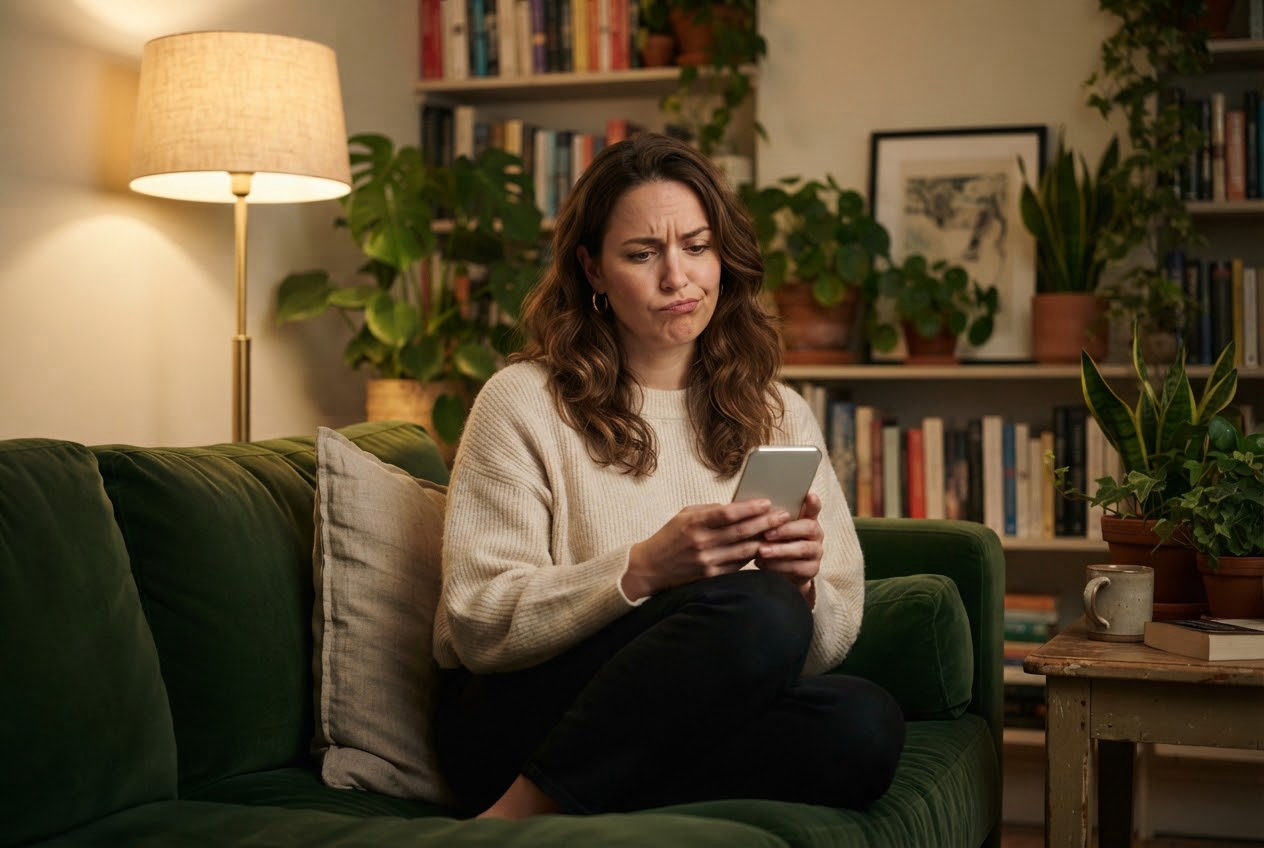
Scammers in online dating especially target people looking for something serious. Those people are inclined to trust, willing to invest emotionally, and reluctant to think badly of someone they're talking to. Christians are an easy target in this sense: scam scripts adapt easily to shared faith — "God brought us together," a request to help someone in need. This article is about telling a real person from a script, meeting safely, and what to do if you've already been scammed.
What a scammer looks like in your messages
No single sign proves anything on its own. But if three or four line up, stop and think.
- Too much, too fast. "I've never met anyone like you" after two days of messaging, talk of marriage within a week. Real attachment doesn't grow that fast.
- Meeting in person never quite happens. Working offshore, serving abroad, in the hospital, currently in another country on a contract. The reasons keep changing, and the video call keeps getting postponed or falls through.
- The profile is almost too good. Magazine-quality photos, a flawless bio, but few details that could actually be checked. Photos are often stolen from real people.
- Pushes to move off the platform fast. "Let's switch to messaging somewhere else, it's easier." The platform has moderation and a report button; a private chat app has neither.
- Talks about faith like it's from a textbook. Lots of generic phrases about God and destiny, but vague or evasive when asked something specific about their congregation or how they came to faith.
- Money comes up. Not right away, and not bluntly. First a story about hardship, then "I'm not asking for anything, just telling you," then the ask itself.
Common scam scenarios
"I just need a little help." A frozen card, a delayed paycheck, money for a plane ticket to come see you. The amount is small on purpose — the first transfer is just a test to see whether you'll send money at all. The amounts grow from there.
"Help someone in need." Especially effective with Christians. A fundraiser for a child's surgery, for rebuilding a church, for a mission trip. The link usually leads to someone else's fundraiser or a private individual's account.
"I sent you a package." A gift from abroad, but customs needs a fee paid to release it. The customs office, the courier, and the gift itself don't exist.
"A great investment opportunity." Almost in passing, your match mentions how well they're doing trading crypto or stocks, and offers to help you get started. They'll even show you your first "gains." You won't be able to withdraw the money.
Blackmail with intimate material. The person steers the conversation toward something intimate and asks for photos or video, then threatens to send them to people you know. The only real protection is beforehand, not after: don't send anything you wouldn't want made public.
How to verify who you're talking to
- Ask for a video call. Not "someday" — in the next few days. A real person looking for a serious relationship won't mind. A scammer will find a reason to say no.
- Reverse-image search their photos. Google Images or a similar tool shows whether the photos belong to someone else.
- Ask for specifics. Which church, who's the pastor or priest, what street is near their place, where they went to school. Not an interrogation, just ordinary curiosity. A scammer trips over details or answers in vague generalities.
- Don't rush personal information. Address, workplace, daily schedule, financial situation — these come out gradually, not in the first week.
- Don't leave the platform too early. As long as the conversation stays on the platform, you have a report button, and moderators can see the history.
First date: the basics
For more on how to plan a first meeting and what to bring, see "First Date: How to Plan It and Stay Safe". In short:
- Meet during the day, somewhere public: a café, a park, a museum.
- Tell someone you trust where you'll be and with whom. Send them a screenshot of the person's profile.
- Get there and back on your own. Don't get into a stranger's car on a first date.
- Keep it to an hour or ninety minutes. If it's going well, you can always plan a second date.
- Never drink something that's been left unattended. It sounds paranoid, but this rule has saved people.
- If something feels off, leave. You don't owe anyone an explanation.
If you've already sent money
First: don't be ashamed. Smart, careful people fall for these schemes, and scammers are professionals specifically at getting past caution.
Second: move fast.
- Call your bank and ask them to reverse or dispute the transfer. The less time that's passed, the better your odds.
- Save everything: the conversation, card and phone numbers, links, receipts, dated screenshots.
- Report it to the police. In many countries you can file a report online; otherwise go in person. Reports are accepted regardless of the amount.
- Report the profile on the service where you met, so this person can't do it to someone else.
- Cut off contact. The scammer will plead, apologize, promise to pay you back. That's part of the script.
How this works at Two We
The service lets you report any profile or conversation, and a real person reviews it. Profiles that get reported are checked, and scam accounts get blocked. But no amount of moderation replaces your own judgment: the rule "not a cent before you've met the person" protects you better than any algorithm.
Look for a person, not someone to rescue. Someone who genuinely wants to build a family with you will show up to meet you in person and won't ask for money for a plane ticket.